Gaetano Thiene: Difference between revisions
(Created page with "'''Gaetano Thiene''' (born July 1, 1947) is an Italian Emeritus Professor of Cardiovascular Pathology at the University of Padua<ref>[https://www.unipd.it/en/contatti/rubrica?detail=Y&ruolo=1&checkout=cerca&persona=unipd&key=AF80D110DD8FE8AA333BB389F0F8A0FE Gaetano Thiene - Emeritus Professor - University of Padua]</ref> where he graduated in 1972. He is in the list of the Top Italian Scientists.<ref name="TIS">[https://topitalianscientists.org/tis/2547/Gaetano_Thiene_-_...") |
No edit summary |
||
| Line 2: | Line 2: | ||
Dr. Thiene set up an interdisciplinary research team, from basic sciences to clinical wards ("from bench to bed"), with Cardiovascular Pathology playing the leading role, thus promoting translational medicine.<ref>Gaetano Thiene, [https://academic.oup.com/eurheartj/article/36/14/837/539898 The research venture in arrhythmogenic right ventricular cardiomyopathy: a paradigm of translational medicine], ''European Heart Journal'', 7 April 2015</ref> He implemented a Ph.D. course, entitled "Translational Medicine G.B. Morgagni". | Dr. Thiene set up an interdisciplinary research team, from basic sciences to clinical wards ("from bench to bed"), with Cardiovascular Pathology playing the leading role, thus promoting translational medicine.<ref>Gaetano Thiene, [https://academic.oup.com/eurheartj/article/36/14/837/539898 The research venture in arrhythmogenic right ventricular cardiomyopathy: a paradigm of translational medicine], ''European Heart Journal'', 7 April 2015</ref> He implemented a Ph.D. course, entitled "Translational Medicine G.B. Morgagni". | ||
{| style="float:right ;border:solid 1px #a2a9b1; background-color: #f8f9fa" cellpadding="5" | |||
|+ <span style="font-size:18px;">'''Gaetano Thiene'''</span> | |||
|- | |||
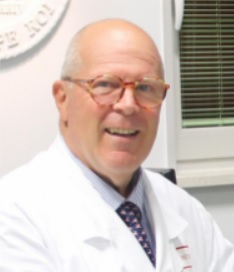
| colspan="2" |[[File:Claudio-Ronco.jpg|center|Gaetano Thiene in October 2022 |thumb|link=https://topitalianscientists.org/tis/2547/Gaetano_Thiene_-_Top_Italian_Scientist_in_Biomedical_Sciences]] | |||
|- style="vertical-align:top" | |||
| '''Born'''|| July 1st, 1947<br/>Longare, Vicenza, Italy | |||
|- | |||
| '''Nationality''' || Italian | |||
|- style="vertical-align:top" | |||
| '''Education'''|| University of Padua | |||
|- | |||
| '''Fields''' || Cardiovascular Pathology<br/>Cardiology<br/>Cardiac Surgery<br/>Genetic<br/>Sudden Death<br/>Cardiomyopathies | |||
|- style="vertical-align:top" | |||
| '''Institutions''' || Emeritus Professor of Cardiovascular Pathology, University of Padua, Italy | |||
|- | |||
| colspan="2" style="text-align: center" |'''Notes''' | |||
|- | |||
| colspan="2" style="text-align: left" | Top Italian Scientist in Biomedical Sciences<ref name="TIS" /><ref name="TIS_BIOMEDICALS" /> | |||
|} | |||
Another significant step forward in applied pathology was the origin of Surgical Cardiovascular Pathology,<ref> C. Basso, M. Valente, A. Poletti, D. Casarotto, G. Thiene, [https://academic.oup.com/ejcts/article/12/5/730/347095 Surgical pathology of primary cardiac and pericardial tumors], ''European Journal of Cardio-Thoracic Surgery'', 1 November 1997</ref> first in Europe, namely the histopathological examination of cardiovascular specimens removed at surgery for a precise nosological identification of the underlying disease. The role blew up after the first cardiac transplantation performed in Padua and first in Italy, with the cardiac rejection monitoring with endomyocardial biopsy.<ref name="Apr1985" /> | Another significant step forward in applied pathology was the origin of Surgical Cardiovascular Pathology,<ref> C. Basso, M. Valente, A. Poletti, D. Casarotto, G. Thiene, [https://academic.oup.com/ejcts/article/12/5/730/347095 Surgical pathology of primary cardiac and pericardial tumors], ''European Journal of Cardio-Thoracic Surgery'', 1 November 1997</ref> first in Europe, namely the histopathological examination of cardiovascular specimens removed at surgery for a precise nosological identification of the underlying disease. The role blew up after the first cardiac transplantation performed in Padua and first in Italy, with the cardiac rejection monitoring with endomyocardial biopsy.<ref name="Apr1985" /> | ||
Last but not least, congenital heart disease had been the first research interest of Dr. Thiene, after the advent of angiography and echocardiography as diagnostic tools and of extracorporeal circulation for open heart surgery. A registry of specimens, with heart malformations, was set up since the '70s for teaching and research purposes. It now consists of 2.000 specimens, preserved in single jars, with all the date and pictures recorded in electronic files. Nowadays it is probably the best existing worldwide.<ref>G. Thiene, C. Frescura, R. M. Bini, M. Valente, V. Gallucci, [https://www.ahajournals.org/doi/abs/10.1161/01.CIR.60.5.1066?cookieSet=1 Histology of pulmonary arterial supply in pulmonary atresia with ventricular septal defect], ''Circulation'', 1 November 1979</ref><ref>Cristina Basso, Barry J. Maron, Domenico Corrado, Gaetano Thiene, [https://www.jacc.org/doi/abs/10.1016/S0735-1097(00)00566-0 Clinical profile of congenital coronary artery anomalies with origin from the wrong aortic sinus leading to sudden death in young competitive athletes], ''Journal of the American College of Cardialogy'', May 2000</ref> | Last but not least, congenital heart disease had been the first research interest of Dr. Thiene, after the advent of angiography and echocardiography as diagnostic tools and of extracorporeal circulation for open heart surgery. A registry of specimens, with heart malformations, was set up since the '70s for teaching and research purposes. It now consists of 2.000 specimens, preserved in single jars, with all the date and pictures recorded in electronic files. Nowadays it is probably the best existing worldwide.<ref>G. Thiene, C. Frescura, R. M. Bini, M. Valente, V. Gallucci, [https://www.ahajournals.org/doi/abs/10.1161/01.CIR.60.5.1066?cookieSet=1 Histology of pulmonary arterial supply in pulmonary atresia with ventricular septal defect], ''Circulation'', 1 November 1979</ref><ref>Cristina Basso, Barry J. Maron, Domenico Corrado, Gaetano Thiene, [https://www.jacc.org/doi/abs/10.1016/S0735-1097(00)00566-0 Clinical profile of congenital coronary artery anomalies with origin from the wrong aortic sinus leading to sudden death in young competitive athletes], ''Journal of the American College of Cardialogy'', May 2000</ref> | ||
== References == | |||
<references/> | |||
Revision as of 12:31, 5 January 2023
Gaetano Thiene (born July 1, 1947) is an Italian Emeritus Professor of Cardiovascular Pathology at the University of Padua[1] where he graduated in 1972. He is in the list of the Top Italian Scientists.[2][3] He achieved post-graduate Diploma both in Cardiology and Pathology, which allowed him to better understand the physiopathology of morbid entities, as Consultant at the University hospital.[4]
Dr. Thiene set up an interdisciplinary research team, from basic sciences to clinical wards ("from bench to bed"), with Cardiovascular Pathology playing the leading role, thus promoting translational medicine.[5] He implemented a Ph.D. course, entitled "Translational Medicine G.B. Morgagni".
| Born | July 1st, 1947 Longare, Vicenza, Italy |
| Nationality | Italian |
| Education | University of Padua |
| Fields | Cardiovascular Pathology Cardiology Cardiac Surgery Genetic Sudden Death Cardiomyopathies |
| Institutions | Emeritus Professor of Cardiovascular Pathology, University of Padua, Italy |
| Notes | |
| Top Italian Scientist in Biomedical Sciences[2][3] | |
Another significant step forward in applied pathology was the origin of Surgical Cardiovascular Pathology,[6] first in Europe, namely the histopathological examination of cardiovascular specimens removed at surgery for a precise nosological identification of the underlying disease. The role blew up after the first cardiac transplantation performed in Padua and first in Italy, with the cardiac rejection monitoring with endomyocardial biopsy.[7]
Last but not least, congenital heart disease had been the first research interest of Dr. Thiene, after the advent of angiography and echocardiography as diagnostic tools and of extracorporeal circulation for open heart surgery. A registry of specimens, with heart malformations, was set up since the '70s for teaching and research purposes. It now consists of 2.000 specimens, preserved in single jars, with all the date and pictures recorded in electronic files. Nowadays it is probably the best existing worldwide.[8][9]
References
- ↑ Gaetano Thiene - Emeritus Professor - University of Padua
- ↑ 2.0 2.1 Gaetano Thiene - Top Italian Scientist in Biomedical Sciences
- ↑ 3.0 3.1 Top Italian Scientists in Biomedical Sciences
- ↑ Cite error: Invalid
<ref>tag; no text was provided for refs namedOspedale - ↑ Gaetano Thiene, The research venture in arrhythmogenic right ventricular cardiomyopathy: a paradigm of translational medicine, European Heart Journal, 7 April 2015
- ↑ C. Basso, M. Valente, A. Poletti, D. Casarotto, G. Thiene, Surgical pathology of primary cardiac and pericardial tumors, European Journal of Cardio-Thoracic Surgery, 1 November 1997
- ↑ Cite error: Invalid
<ref>tag; no text was provided for refs namedApr1985 - ↑ G. Thiene, C. Frescura, R. M. Bini, M. Valente, V. Gallucci, Histology of pulmonary arterial supply in pulmonary atresia with ventricular septal defect, Circulation, 1 November 1979
- ↑ Cristina Basso, Barry J. Maron, Domenico Corrado, Gaetano Thiene, Clinical profile of congenital coronary artery anomalies with origin from the wrong aortic sinus leading to sudden death in young competitive athletes, Journal of the American College of Cardialogy, May 2000

