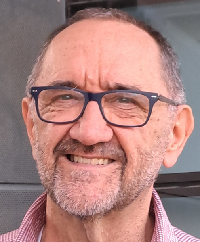
Mario Cardano
Mario Cardano is Full Professor of Sociology at the University of Turin, Department of Cultures, Politics and Society. His research focuses on three interconnected areas: qualitative research methodology, health sociology, and argumentation theory.
In qualitative methodology, his work integrates ethnographic practice with argumentation theory, exploring abductive reasoning and the evidential paradigm in social research. His methodological contributions include Defending Qualitative Research: Design, Analysis, and Textualization (Routledge, 2020), translated into Italian and Portuguese.
In health sociology, his research addresses vaccine hesitancy, trust in healthcare practices, coercive treatments in psychiatry, and the Hearing Voices Movement. He has also developed interdisciplinary collaborations with social epidemiologists on social inequalities in health. He coordinated the Italian team in the EU-funded Vax Trust project and currently directs a PhD programme in Health Sciences.
He is Adjunct Professor at the Federal University of Pelotas (Brazil) and at the State University of Montes Claros (Brazil), where he teaches and publishes regularly in Portuguese.
 |
| Nationality |
| Italian |
| Born |
| November 8, 1958 |
| Education |
| University of Turin (Italy) |
| Fields |
| Health Sociology; Qualitative Methods for Social Research; Theory of Argumentation; Trust Studies |
| Institutions |
| University of Turin (2000-present) |
| University of Eastern Piedmont (1996-2000) |
Education and Career
Education
Mario Cardano graduated magna cum laude in Philosophy from the University of Turin in 1985 and earned a PhD in Sociology and Social Research from the University of Trento in 1992.
Academic Career
He began his academic career as Contract Professor in Psychometric Statistics at the Faculty of Education, University of Turin (1990–1993). He then served as Researcher in Methodology of Social Sciences at the University of Eastern Piedmont (1996–2000) before moving to the University of Turin as Associate Professor (2000–2006). Since October 2006, he has been Full Professor in Methodology of Social Sciences and Sociology of Health at the University of Turin.
Research Leadership
He was Principal Investigator for the national research programme (PRIN) “Biographical transitions: a comparison between objects and models” (2005–2006) and for the Compagnia di San Paolo-funded project on psychiatric interventions, involuntary treatment, and restraint (2017–2019). He served as Work Package Leader in the Horizon 2020 project VAX-TRUST, coordinating a team ethnography of parent–healthcare professional interactions (2021–2024). He also acted as expert evaluator for the European Commission’s Horizon 2020 funding programme (2018).
Academic Administration and Service
He directed the PhD Programme in Sociology and Methodology of Social Research (Universities of Turin and Milan, 2015–2017) and currently directs the PhD School in Health Sciences (2024–2027). He also directs the Qualitative Research Lab at the University of Turin.
Professional Associations and Editorial Roles
He has been a member of the Rassegna Italiana di Sociologia board since 2001 and served as director (2010–2012). He coordinated the Health and Medicine Research Network of the Italian Sociological Association (AIS, 2017–2020) and was a member of the AIS national board (2020–2023). At the European level, he served on the board of the European Sociological Association’s Research Network on Sociology of Health and Illness (RN16, 2021–2024). He currently sits on the editorial boards of SAGE Open (Sociology of Health), Journal of Nursing and Health (International Advisory Board, since 2018). He has been a member of the International Honorary Advisory Board of European Quarterly of Political Attitudes and Mentalities since 2012. He has served as peer reviewer for numerous national and international journals, among which Social Science & Medicine, Health: An Interdisciplinary Journal for the Social Study of Health, Illness and Medicine, Quality and Quantity, and Vaccine X.
Research Interests
1. Qualitative Research Methodology
His methodological research focuses on the epistemology and methods of qualitative inquiry, with particular attention to the integration of argumentation theory into social research practice. Recent work explores abductive reasoning and the evidential paradigm in ethnographic research.
Key outcomes include the monograph Defending Qualitative Research: Design, Analysis, and Textualization (Routledge, 2020), translated into Italian and Portuguese, and the direction of the Qualitative Research Lab at the University of Turin.
Teaching impact: He has taught Qualitative Methods for Social Research in the MA programme in Sociology for over 15 years, and Qualitative Tools and Methods for Communication in the MA programme in Public and Political Communication. He has also delivered the Qualitative Research course in the PhD programme in Sociology and Methodology of Social Research (Universities of Turin and Milan) for over 10 years, and in the PhD School in Health Sciences since its establishment in 2024.
2. Health Sociology
His research in health sociology addresses vaccine hesitancy, trust in healthcare practices, coercive treatments in psychiatry (involuntary hospitalisation and restraint), the Hearing Voices Movement, and social inequalities in health. This line of research involves interdisciplinary collaborations with social epidemiologists.
Key outcomes include his role as Work Package Leader in the Horizon 2020 project VAX-TRUST (2021–2024), coordinating a team ethnography of parent–healthcare professional interactions, and as Principal Investigator for the Compagnia di San Paolo-funded project on psychiatric interventions, involuntary treatment, and restraint (2017–2019).
Teaching impact: He directs the PhD School in Health Sciences (2024–2027), which provides an interdisciplinary training environment at the intersection of sociology and health research.
Selected Publications
Cardano, M., Costa, G., & Demaria, M. (2004). Social mobility and health in the Turin longitudinal study. Social Science & Medicine, 58(8), 1563–1574.
Cardano, M. (2010). Mental distress: Strategies of sense-making. Health, 14(3), 253–271.
Cardano, M. (2010). Metodi qualitativi. Bologna: il Mulino. [Portuguese translation, 2017]
Cardano, M., Scarinzi, C., Costa, G., & d’Errico, A. (2018). Internal migration and mental health of the second generation: The case of Turin in the age of the Italian economic miracle. Social Science & Medicine, 208, 142–149.
Cardano, M. (2020). Defending Qualitative Research: Design, Analysis, and Textualization. London: Routledge. [Italian translation, 2020; Portuguese translation, 2024]
Cardano, M., Numerato, D., Gariglio, L., Hasmanová Marhánková, J., et al. (2023). A team ethnography on vaccine hesitancy in Europe: A case study of a local truth construction. Rassegna Italiana di Sociologia, 64(4), 615–642.
Scavarda, A., Cardano, M., & Gariglio, L. (2025). Childhood vaccine hesitancy as an interaction-based phenomenon. Sociology of Health & Illness, 47(4), e70036.
Numerato, D., Hasmanová Marhánková, J., Cardano, M., Scavarda, A., et al. (2025). Do health care professionals trust parents? A team ethnography of childhood vaccine hesitancy from seven European countries. Journal of Health and Social Behavior.
Cardano, M. (2026). The ethnographer as detective: Indiciary paradigm and abduction. Sociologica, 20(1).
Full publication list: Google Scholar
