Daniele De Luca
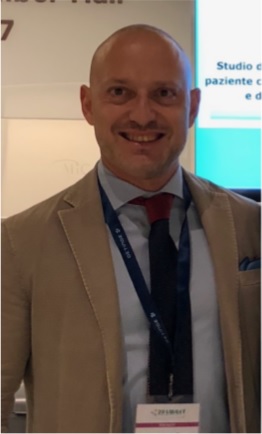
Daniele De Luca is a Full Professor of Pediatrics (Neonatology) and head of the Division of Pediatrics and Neonatal Critical Care at the “A. Beclere” Hospital belonging to APHP-Paris Saclay University, where he has an intense clinical and research activity[1]. He has been the youngest Division Chief (appointed at 35 years old) and one of the youngest Professors of Pediatrics (appointed as associate and full professor at 37 and 42 years old) in Europe. His hospital is the main perinatal center in France including one of the biggest European neonatal intensive care units.
| Born | Rome, Italy |
| Nationality | Italian |
| Education | Catholic University of the Sacred Heart (Rome, Italy) |
| Paris Sorbonne University | |
| Fields | Neonatal and Pediatric Critical Care |
| Institutions | Assistance Publique-Hopitaux de Paris (Since 2013) |
| Paris Saclay University (Since 2015) | |
| Notes | |
| Top Italian Scientist in Clinical Sciences | |
For his research activity he is a member of INSERM, belonging to Physiopathology and Therapeutic Innovation Unit[2] and has been collaborating as associate researcher with the Institut Pasteur[3]. His research focuses on respiratory critical care from different points of view (namely surfactant catabolism, lung tissue inflammation, lung ultrasound, respiratory support techniques, and ARDS epidemiology). He was the first in clarifying the role of secretory phospholipase A2 in surfactant catabolism and the effect of therapeutic hypothermia on lung biology and function. He introduced lung ultrasound in neonatal critical care and invented the neonatal lung ultrasound score now used worldwide, as well as the ultrasound-guided surfactant administration. Regarding respiratory support he has been actively studying the refinement of non-invasive respiratory support techniques to spare invasive ventilation in preterm babies: his bench studies allowed the clinical application of nasal high frequency oscillatory ventilation, which he then tested on a large scale with a French-Chinese collaboration. Finally, he has been responsible for the movement leading to the recognition of the existence of neonatal ARDS (see below the main publications for each of these research areas). His research has received more than 350K Euros of funding from several bodies.
During his career Prof. De Luca’s also worked on two ancillary topics. One is neonatal jaundice as he performed several studies on skin bilirubin kinetics. He drew the first European nomogram of skin bilirubin to be used for daily management in nursery for which he received the Acta Paediatrica Young Investigator Award. The second is the effect of pandemics on newborn health. His group discovered SARS-CoV-2 mother-to-child transmission, and studied the phenomenon using a multidisciplinary (clinical, virology, pathology) approach; he served as World Health Organization Advisor and was a member of the WHO committee issuing the definition for perinatal and neonatal SARS-CoV-2 infection[4]. His works on neonatal COVID-19 had received worldwide mass-media coverage.
All in all, he is an advocate for a pathophysiological based critical care, using several monitoring and therapeutic techniques even for the smallest babies. Recently he was one of the founder of the French network of neonatal extracorporeal renal replacement therapy and his work was the first in applying this to preterm babies. He is an advocate for a more active and translational research to advance neonatal/pediatric critical care. For this reason, together with the Editor of Lancet Child Health, he launched the Lancet Commission on the Future of Neonatology, with the participation of the EU Commissioner on healthcare[5].
His secondary interests brought him to be interested in hospital/medical management and in bioethics applied to neonatal and perinatal care, for which he collaborates with the Pontifical Academy of life. He is listed amongst the top Italian scientist in the category of "clinical sciences"[6].
Education and career
Daniele De Luca graduated from Catholic University of the Sacred Heart (cum laude) in 2002 and he was awarded the prix for the best dissertation from the Italian Society of Neonatology. He then earned a postgraduate master degree in pediatric emergencies (2003) and in neonatal pulmonology (2004) at the same University. He specialized in Pediatrics with subspecialty in Neonatology and neonatal critical care (cum laude) in 2007 with a dissertation on the role of secretory phospholipase A2 in different types of neonatal respiratory failure; he earned a PhD in Clinical Molecular Biology (cum laude) in 2012 defending a thesis about the clinical and biological role of secretory phospholipase A2 in pediatric ARDS, always at Catholic University of the Sacred Heart. He also spent one year and half of anesthesiology/critical care residentship shared between the Catholic University of the Sacred Heart and the “G.D’Annunzio” University (Chieti, Italy). He was granted the Italian academic habilitation (ASN: Abilitazione Scientifica Nazionale) as associate professor in 2012. Once in Paris, he attended the “Ecole de Management pour Médecins des Hôpitaux (EMAMH)” and received the postgraduate diploma in hospital management in 2016. He was granted the Italian academic habilitation (ASN: Abilitazione Scientifica Nazionale) as full professor in 2016 and the French academic habilitation (HDR: Habilitation à Diriger des Recherches) at Paris Sorbonne University in 2019.
Role in the European Society for Paediatric and Neonatal Intensive Care (ESPNIC)
He had always been active in ESPNIC, starting as Respiratory Section Deputy Chair (two terms), then as Secretary, President – Elect and PresidentCite error: The opening <ref> tag is malformed or has a bad nameESPNIC - Executive Committee Structure</ref>. During his Presidency, ESPNIC increased its membership, significantly expanded its activities both on the scientific and educational side, launched virtual activities and new websites. Most importantly, together with the President of the European Society for Intensive Care Medicine (ESICM), he has been the author of the new agreement between the two societies leading to the launch of Intensive Care Medicine-Paediatric & Neonatal (ICM-PN) the European journal exclusively dedicated to paediatric and neonatal critical care.
Editorial and congress roles
He has served as Associate Editor of Respiratory Research, responsible for the neonatal research (2017-2021) and he is currently the Editor of the European Journal of PediatricsEuropean Journal of Pediatrics - Editors and an Editorial Board member of Chest[7].
He created the first conference entirely dedicated to lung ultrasound in neonatology and pediatrics (LAUNCH: Lung ultrAsoUnd in Neonates and CHildren), held every year since 20183rd LAUNCH - Lung Ultrasound in Neonates and Children and the International Week on Surfactant Research[8], a weeklong virtual event dedicated on basic, translational and clinical surfactant research spanning from neonatology to adult critical care medicine, held every two years since 2020. He regularly serves as reviewer for top flag journals, national and international research funding programs.
References
- ↑ Service de Pédiatrie et réanimation néonatales Hôpital Antoine-Béclère
- ↑ Unité de recherche Inserm UMR_S 999
- ↑ Institut Pasteur - Role of phospholipases A2 in lung inflammation
- ↑ World Health Organization - Definition and categorization of the timing of mother-to-child transmission of SARS-CoV-2
- ↑ Facebook - ECPM: European Congress of Perinatal Medicine
- ↑ Daniele De Luca - Top Italian Scientist in Clinical Sciences
- ↑ elsevier.com - CHESS
- ↑ International Week on Surfactant Research

