Simone Taioli
Simone Taioli (born September 9, 19, Cesena, Italy) is a senior scientist at the European Centre for Theoretical Studies in Nuclear Physics and Related Areas (ECT*), Bruno Kessler Foundation, Trento (Italy). He graduated summa cum laude in Nuclear Engineering from the University of Bologna (2000). Dr Taioli received two PhDs, one in Nuclear Engineering (Bologna, 2004) for the development of a theoretical method for the simulation of Auger spectra of molecules and solids, and a second in Physics (University of Trento, 2013) for the study of nucleosynthesis of chemical elements in evolved stars using typical methods of atomic and condensed matter physics. As a postdoctoral researcher, he worked at UCL (London, UK) and at the University of Sheffield, where he worked on the first-principles simulation of electronic, optical and thermodynamic properties of materials even under extreme conditions. He has also held several visiting positions at the Sorbonne Université, Charles University in Prague, the École Normal Supérieure de Lyon, UCL, Gdańsk University of Technology, and the University of Murcia. Dr Taioli received five habilitations as associate and full professor of chemistry and condensed matter physics in both France and Italy. He also held professorships at the Peter the Great Polytechnic University of St Petersburg and the Gdańsk University of Technology, where he taught courses in many-body physics and scattering theory.
His current research interests range from the development of novel computational many-body techniques for the study of condensed matter systems to relativistic methods for estimating nuclear decay in astrophysical scenarios and hadron therapy for curing cancer.
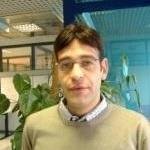 |
| Nationality |
| Italian |
| Born |
| September 9, 1974, Cesena, Italy |
| Education |
| University of Bologna (Italy) |
| Fields |
| physics - condensed matter; physics - computational physics; physics - stellar nucleosynthesis; physics - biophysics. |
| Institutions |
| University of Bologna, Italy (2001-2003) |
| University College London (2004-2007) |
| The University of Sheffield (2008-2009) |
| Fondazione Bruno Kessler (2009-Present) |
Education and career
- Jan 2015 – today: Senior Researcher at the European Centre for Theoretical Studies in Nuclear Physics and Related Areas (ECT*), Bruno Kessler Foundation, Trento (IT)
- Oct 2022 – Oct 2023: Associate Professor at the Gdańsk University of Technology, Gdańsk, Poland
- Sept 2020 – Feb 2022: Professor at Peter the Great St. Petersburg Polytechnic University - St. Petersburg, Russia
- Oct 2015 – Dec 2017 Adjunct Professor at the Institute of Particle and Nuclear Physics, Charles University, Prague (CZ)
- May 2010 – Dec 2014 Permanent position – Group Leader of the Solid State and Materials Science Division at the Interdisciplinary Laboratory for Computational Science, Centre for Materials and Microsystems, Bruno Kessler Foundation & University of Trento, Trento (IT)
- May 2008 – May 2010 Tenure-track position at the Centre for Materials and Microsystems, Bruno Kessler Foundation, Trento (IT)
- Oct 2007 – Apr 2008 Postdoctoral Research Fellow at the Electronic Engineering Department, The University of Sheffield, Sheffield (UK)
- Oct 2005 – Sept 2007 Postdoctoral Research Fellow at the Department of Earth Sciences, University College London, London (UK)
- Jan 2004 – Sept 2005 Postdoctoral Research Fellow at the Department of Physics and Astronomy, University College London, London (UK)
- October 2009 – April 2013: 2nd PhD in Physics (Doctor Europaeus), University of Trento, Italy
- January 2001 – May 2004: 1st PhD in Nuclear Science and Technology, University of Bologna, Italy and Scuola Normale Superiore, Pisa, Italy
- October 1994 – December 2000: Undergraduate studies in Nuclear Science and Technology, University of Bologna, Italy. Final grade: summa cum laude
Research interests
- Development and application of state-of-the-art many-body techniques, from mean-field methods (Hartree-Fock, density functional theory and time-dependent density functional theory) [1,2] to correlated methods such as configuration interaction (CI), many-body perturbation theory (GW) [3], multiconfigurational self-consistent approaches (MP2, MCSCF, RASPT2) and path-integral Monte Carlo (PIMC).
- Development and application of theoretical spectroscopy methods for the investigation of resonance-affected photo-excitation events in materials at different aggregation levels in their interaction with external fields. I am one of the main developers and maintainers of the SURPRISES code, a mixed ab initio and Monte Carlo suite for the simulation of electron spectra (XPS, Auger, ARPES, EELS, NEXAFS) [4] and charge transport properties in materials [5], also to study the interaction of energetic ion beams with biomaterials for cancer treatment [6].
- Photochemistry and photophysics: Investigation of light-harvesting systems, such as multichromophoric pigment-protein complexes, bacteriochlorophyll, carotene, using multireference methods to interpret two-dimensional and nonlinear pump-probe spectroscopies [7,8].
- Development of novel methods to study beta decay in stellar nucleosynthesis of evolved stars and in big-bang nucleosynthesis We have developed from scratch a relativistic approach to scattering theory based on the Dirac-Hartree-Fock approximation to interpret the beta decay spectra of heavy nuclei [9,10,11].
- Material modelling under extreme temperature and pressure conditions, especially in the earth and mineral sciences [12].
- Artificial intelligence for quantum systems: Development of deep learning solutions for the investigation of quantum states [13].
- Modelling of carbon-based nanostructures, such as carbon nanotubes and pseudospheres, fullerenes, graphene, graphene foams, nanotube bundles and functional, memristive and bioinspired materials [14,15,16,17].
- Ultra-cold Fermi gases at unitarity and BCS superconductivity [18].
- Study of Metal-Organic frameworks (MOF) and Zeolitic Imidazolate framework (ZIF) for gas separation and storage [19].
Notable publications
- Advancements in secondary and backscattered electron energy spectra and yields analysis: From theory to applications. Simone Taioli, Maurizio Dapor. Surface Science Reports 80, 100646 (2025).
- Theoretical estimate of the half-life for the radioactive Cs and Cs in astrophysical scenarios. Simone Taioli et al. The Astrophysical Journal 933, 158 (2022).
- - Relativistic quantum theory and algorithms: a toolbox for modeling many-fermion systems in different scenarios. Simone Taioli, Stefano Simonucci. Annual Reports in Computational Chemistry 17 (2021).
- Non-adiabatic ab initio molecular dynamics of supersonic beam epitaxy of silicon carbide at room temperature. Simone Taioli et al. The Journal of Chemical Physics 138 (4) (2013).
- Melting curve of tantalum from first principles. Simone Taioli, C Cazorla, MJ Gillan, D Alfè. Physical Review B - Condensed Matter and Materials Physics 75 (21), 214103, (2007).
